Saturday, 11 May 2013

The prophet motive in physics

As a not-famous science blogger one question no-one ever asks me is "who are my science heroes?"  The answer, which I don't have to give since no-one asks is "no-one".  It's not that I don't admire the scientific achievements of many people, though I try to be careful of the effect whereby all good things get attributed to a few people while many may have contributed.  It's more that the idea of raising people up to a sort of hero status seems anathema to me and my view of science.  Science is about ideas, not personalities.  Most humans, myself included, are somewhat flawed, and I'm uneasy about the apparent mixing up of people and ideas when it comes to hero-worship.

Richard Feynman might have had a birthday today if he'd been alive, and he might have been a good physicist, but should I worship him in a crypto-religious sort of way?  I don't think so.  I'm not sure he was a particularly nice guy.  Maybe he was, maybe not.  I've heard conflicting opinions on this from people that knew him, but I don't think it matters much, since I don't much like worshiping people. I won't judge his physics by his personality, and I won't judge his personality by his physics.  It seems straightforward to me. I worry that things get conflated, though.

Friday, 10 May 2013

Greek is actually a real language


In a meeting earlier today, we were discussing outreach activities for the Physics Department at the University.  Amongst all the debate, and the useful discussion about things that we could actually do, I pointed out that I get irritated by science outreach in which greek letters are used to stand in for similar-looking roman letters.  Like the logo here, for example, or our own University's physics society logo.

I don't think there's anything to be embarrassed about to read a greek letter and know how to pronounce it, and it smacks of a kind of reverse arts-science ignorance-pride to use them as if they were just shapes that your computer font happened to supply.  The fault is more often in the other direction, when the likes of Jeremy Paxman on University Challenge shows impressed wonder at the correct answer to a science question and outright scorn at the ignorance to an arts question.  We don't have to respond in kind by treating the greek alphabet as if they were only symbols for use in physics equations and shunning their pronunciation or their other meanings.


Wednesday, 8 May 2013

The Casimir Force

Conference Photo from the 2003 Kazimierz Dolny
conference.  I'm in there somewhere.
I received an email this morning that I almost deleted at a glance as a circular that was not relevant to me.  It concerned the proceedings of a conference in my area that I didn't attend.  However, I paid just about enough attention to note that the email announced the proceedings of an annual conference in Poland that had just been published and that would be freely downloadable for one month (as per IoP Publishing's usual policy for subscription journals).  I took a look and found a bunch of interesting articles.

It made me think of the conference series, held in Poland every year and organised by the University of Lublin.  I attended one of them around ten years ago, not long after I became a lecturer at Surrey.   The town it takes place in, Kazimierz Dolny, is a lovely small town in southern Poland, and the conference is was full of very relevant stuff for me.  Partly, this is because Poland has a ratio of nuclear theorists to experimentalists that is roughly in line with the rest of the world, while the UK's is out of line (see p19 of the recent IoP report for the data), and the Lublin group in particular, I guess, lines up well with me.

I also remember some other things about the conference:  A French student in attendance challenged me to a drinking competition (thinking that Brits were all great drinkers).  Against my better judgement I agreed, and was glad that my challenger turned out to be sufficiently drunk when making the challenge that he managed only one drink of the competition before being unable to continue, and that I was therefore not honour bound to go any further... and I remember that this was a conference in which it was expected that one shared a room with another attendee.  I shared mine with an attendee (also from France) about my age, and really I've never experienced someone else who snores so badly.  To be fair, he did apologise in advance on the first day as he was well aware of it.

As well as the memories, it made me think of the fact that many University groups run regular renowned conferences every year in nuclear physics that attract good international speakers as well as being great training opportunities for local students.  Poland have this one and the Zakopane conference (and apologies Poles if I've forgotten another).  Of course, Poland supports a far larger community of nuclear physicists than countries like the UK do, but still... it got me thinking that it might be nice to organise such a thing.  On the other hand, perhaps I should prefer that I get to travel to these sorts of events run by someone else in rather nice places.  I won't be off to Kazimierz again this year, but I'll be going to one of the regular Bulgarian conferences, swapping the North Downs for the Rila Mountains.

Thursday, 2 May 2013

... for coins

Last week, after a triumphant victory in the Wates House pub quiz (we got £1.50 each in profit, before you take the purchase of drinks into account), my partner Natasha and her dad, who also took part in the quiz, discussed more lucrative ways to make use of the accumulated bits of assorted information that litters our brains.  In the ensuing post-pub machinations, Natasha signed me up for The £1,000 Minute, which goes out on Smooth Radio every morning.  It's not a station to which I am particularly accustomed, but i didn't protest too strongly when she signed me up.  Lo and behold they got back pretty quickly, and asked me to appear today.

One is supposed to answer 10 questions in one minute, and if you get them all correct, then you get £1,000.  I listened to the slot for the last couple of days, and the questions seemed not too hard, providing that they are all on suitable topics.  Yesterday, for example, there was one about celebrity chefs and I had no idea.

So, at 7:40 this morning they called me up and I was live on Smooth Radio enduring small talk as a preamble to attempting to transfer £1,000 of Guardian Media Group money to the washing machine replacement fund.  Sadly I got off to a terrible start, from which no recovery was possible (mostly because you need to get all ten questions).  I couldn't think of the name of Helen Mirren to the answer of who won the best actress award at the Olivier awards last week, and I would never have been able to answer the next one on the name of the Beckhams' one-year-old daughter.  Then later on, I recognised the opening lines "I was dreaming of the past, and my heart was beating fast" from which I was supposed to identify a song, but I am really bad at linking spoken, not sung, lyrics to songs.  I can't remember all the questions I got right.  Salinger wrote Catcher in the Rye and Bratislava is the capital of Slovakia, and five forgotten others... Oh well.

Fortunately, Smooth Radio don't seem to have a listen again feature, so me doing what I allude to in the title of this blog post is forever lost.  Instead, here's John Lennon's Jealous Guy, the song I failed to spot:

Monday, 29 April 2013

Surrey neutron star workshop

This is just a quick advert for a workshop we are holding at Surrey on neutron stars.  It's being part-funded by our local "Institute for Advanced Studies" (I didn't pick the name), which always requires as multidisciplinary a theme as possible, so on-topic areas include effectively anything that you think might relate to neutron stars, so very many areas of physics an astronomy could be relevant.  Maybe even people interested in studying the geometry of pasta might be interested.  

The deadline for submitting abstracts is tomorrow, so get your skates on if you'd like to attend and give a presentation.  Full details at the workshop website.

Friday, 26 April 2013

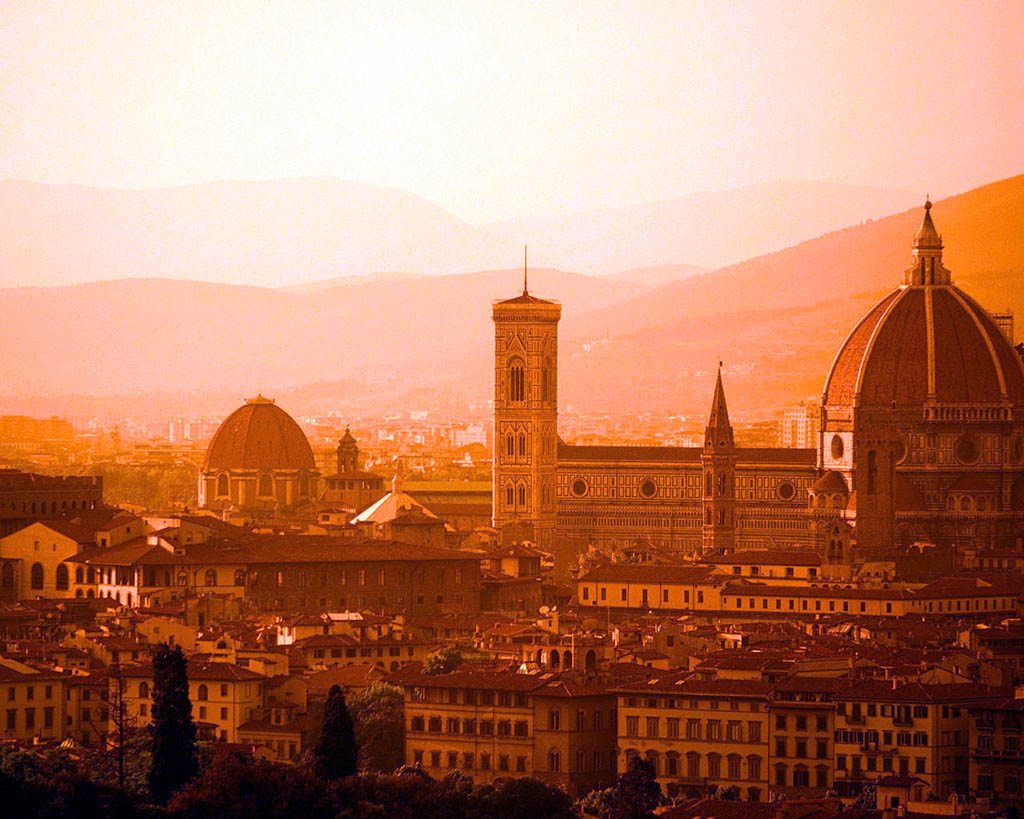
Going to Florence

Every few years, there is a very generically-named international nuclear physics conference, which goes by the name "INPC" - or International Nuclear Physics Conference.  INPC'13 is being held in Florence, and the organisers have seen fit to accept my abstract for a talk.

I noticed earlier in the week that the full programme is up, so I downloaded it to see when I would be speaking.  I've not been to an INPC before, but I was aware that these are huge conferences by nuclear physics standards.   I see from the programme that during the parallel sessions, there are nine concurrent talks going on.  I'm not sure how that will play out for numbers in each of the sessions, and I guess I'll just have to see.  It at least doesn't appear that I am clashing with anything so very similar, so at least those few people who desperately want to see me talk will have no dichotomies.  Or trichotomies and so on.

I've never been to Florence before.  I hear it's nice.  It makes me think of this song by Zoot Money, which I know thanks to my dad's record collection.  It's clearly too obscure to have a YouTube entry, unfortunately, so the link is to Spotify.

Anyway, I'm very much looking forward to going.  The range of talks looks really good, and you can expect me to blog quite a bit from there.  I'll have a little time for sightseeing, so if there are any things you want to suggest that I see, please comment below

Sunday, 21 April 2013

The REF is a ranker

There have been a couple of posts I've seen over the last few days about the REF: the system by which the UK government decides on a part of the funding it gives to UK universities.  Perhaps unsurprisingly, given that I choose to read the posts of these bloggers, I largely agree with the opinions of telescoper and to the left of centre.  There are some interesting comments on telecoper's post.  The chief protagonist makes some interesting points, but ultimately, the suggestion that because the submitted papers have been through peer review already means that the panel don't need to do that again make no sense to me.  In my area (nuclear physics), the acceptance rate in Physical Review, which is surely the toughest specialist journal to be accepted in, is around 80%.  Elsewhere - in other journals - I expect it is even higher so that extant journal peer review is utterly irrelevant when it comes to deciding whether peer reviewed papers submitted for the REF are so-called 4*, 3*, 2* or 1*.  Peer review in journals judges correctness more than quality. To the extent that any of the classifications make any sense, all published papers, that have been through peer review, would still need to be re-reviewed in full by the panel to decide on those categories.  As Peter says, this can't really happen properly.  I also agree with his feeling that panel members who have been told not to take where papers have been published into account will still take where they are published into account.  I have heard the opinions of enough people on previous RAE panels to believe that the rules will not be adhered to in that regard.

The protagonist also pointed out something I didn't know:  That the Computer Science community had asked for Google Scholar to be included in the citations information.  As things stand, only the Scopus citation data from Elsevier will be given to panels, and Google Scholar has been investigated but has been ruled out.  I guess that wouldn't much matter if all the different metric websites agreed with each other.  But do they?

I spent a little time this afternoon looking at the papers I have published since 2008 (the REF period, basically) and the citation information from the obvious different websites.  It is not necessarily the most representative sample of papers, but at least one relevant for the REF.  They were Google Scholar, Scopus (which the REF is using), ISI, and the individual website metric measurements.  Here is the graph of total citations since publication for the 25 papers I've published since 2008.  The vertical grid lines separate each paper, with the indicated bars showing the number of citations according to each website.

What can be said about the graph (or the data from whence it came)? In a perfect world, you would hope that for each paper, the number of citations would be identical for each website.  Obviously it is not, and that is not surprising, but is it worrying?  It's certainly noticeable that some papers have wildly different numbers of citations according to different sites.  Paper 7, the highest cited paper, has about twice as many with google scholar as with Scopus or ISI.  Google Scholar is usually the most comprehensive, including e.g. citations by theses published on institutional websites, yet sometimes ISI comes out with more hits (e.g. #19 in which ISI comes out top.  Scopus is very low here).  There are worrying things.  Paper #14 is my third highest cited thing according to Google Scholar, and that is correct, as far as I can tell, but Scopus, the systems paid for by the taxpayer to do the judgement, is not aware of the paper, despite it being published in a mainstream journal (Europhysics Letters).  There are plenty of other anomalies.  It's not perhaps as clear as it might be from the figure, but there are a few examples of where drastic differences are evident from the different websites.  I'm happy to send you my more detailed breakdown, if you want to check it out.