Tuesday, 6 February 2018

RIP Mark E Smith

I've been known to post music on this blog for various reasons, including as tributes to artists who have recently died.  As one of the many fans of The Fall in the UK nuclear physics community, I feel I ought to mark the death The Fall's Mark E Smith last month with a song of theirs.

I was reminded of it the last time I attended the annual Institute of Physics Nuclear Physics Conference when it was in Birmingham.  The conference venue was the University of Birmingham's Business School

Incidentally, the external examiner for our physics degrees used to be one Mark E Smith, of the University of Warwick.  As I recall, he is well aware of his namesake. 

Friday, 2 February 2018

Fidel Castro Díaz-Balart 1949-2018

A few days ago I received the latest copy of Nuclear Physics News International, a quarterly magazine about nuclear physics and its applications, produced on behalf of NuPECC ("Nuclear Physics European Collaboration Committee").

One of the articles in the magazine was "On the Development of Nuclear Physics in Cuba".  It gives, as the name suggests, a description of nuclear physics research in Cuba; an academic activity that started after the 1976 construction of a nuclear power plant in concert with support from the USSR.  The activity included a lot of applications of nuclear and radiation research, such as production of medical isotopes, industrial profiling, dating of samples, environmental monitoring, as well as more pure physics studies.  I had the pleasure of attending one of the conferences organised by the nuclear physics researchers in Cuba some years ago (2005, if I remember correctly), and remember being impressed by the range of applications being worked on by the students.  

The article in Nuclear Physics News International was written by Fidel Castro Díaz-Balart, a member of the Academy of Sciences of Cuba, and key mover in the Cuban nuclear research programme.  He also happens to be a son of Fidel Castro, erstwhile Cuban leader, which has made him of interest to the news media.  Because of this, I was able to read of his death, alas, which was reported this morning.  He had been suffering from depression, and in the end he killed himself.  It's tragic to hear of a fellow human's suffering, whoever they are, but as a colleague in the international nuclear physics community, it's a reminder to me (as if I needed it) that mental health problems know no borders of nationality, of rich or poor, famous or unknown.  According to the reports (from Granma, the Cuban communist party's newspaper), Dr Castro had been suffering from some time, including spells in hospital.  At least, then, he was getting treatment.  Another reminder; mental health problems can be treated.  

I was put off reading the article in Nuclear Physics News because of the misaligned printing (see picture).  If you want to read it, follow the "latest copy" link in the first line of the blog post.


Wednesday, 24 January 2018

Lecture Capture

I attended a meeting today which was a demonstration of the abilities of the lecture capture software we have at the University.  It's called Panopto, and it means that I now have the ability to record lectures, work-throughs of tutorial problems, or anything else I think of that can be re-played as a video and audio stream that would come in useful for teaching.

It seems like only a good idea to me, that I can let students review a lecture again, even make group annotations, comments and discussions of it.  I'd be interested to hear if any readers have done something similar and have useful feedback or suggestions.  Also I'd be interested to hear contrary views about it being a good idea. 

The picture shows a representative example of me standing in front of a whiteboard (about 15 years ago according to the datestamp of the file). 


Thursday, 18 January 2018

Nuclear Physics at 78ºN

I've been out of action lately;  off work on sick leave for the last few months of 2017.   Upon my return I notice that the next in the series of Nordic Meetings on Nuclear Physics is taking place in Longyearbyen, Norway.  This has to rank as one of the most exotic places for a nuclear physics conference to take place in.  It's about as far north in the world that one is able to get to using scheduled transport.  It's further north than anywhere in mainland Canada or Russia, and the northernmost place with civilian inhabitants.  While it is sorely tempting to go there given the opportunity, I have no good justification for using up travel budget on a relatively expensive location for a conference which, while interesting and relevant to me, is not vital to my research.

Although it was quite a while ago, I have actually been to Longyearbyen once before.  I was on a cruise as a companion of someone employed to play harp recitals on the ship.  My only task was to do a bit of harp-lugging, for which I got a free cruise from Newcastle, up the coast of Norway, stopping off at various points, and then up to Spitsbergen, where Longyearbyen is.

I don't have my photos of the trip to hand, so here's one that I found from google maps of the town of Longyearbyen.  My trip was in October, so there was snow on the ground as in the picture.


Friday, 12 January 2018

The loneliness of the long-suffering ECR

Post-docking can be a lonely life, being part of a university research group, without necessarily having much connection with the rest of university life.  That, and the series of short-term contracts are not conducive to easily building up interactions with other people.  

A postdoc who used to be a PhD student here at the University of Surrey has had the excellent idea of setting up a mailing list to give social support to lonely early career researchers who would like it.  In the hope of spreading the news about it a bit wider, I point to the website she has created about it here.

Saturday, 2 September 2017

A FAIR view

I remember in the relatively early days of the WWW, or at least my first experiences of it in the early-to-mid-nineties, it was considered pretty exciting when webcams came along.  I guess most web users of the time would have looked at least once to see how much coffee was in the pot of the Trojan Room Coffee Pot in the Computer Science Department at a University of Cambridge, via the webcam pointed at it.

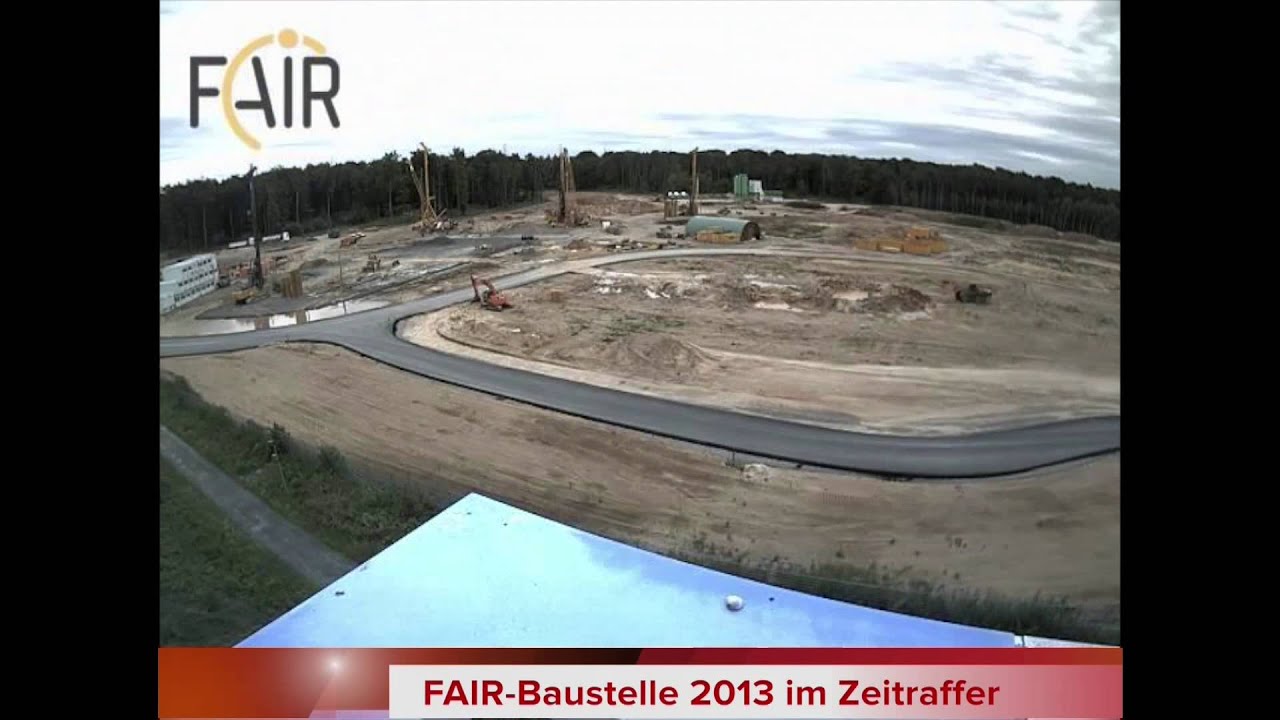
I can't really comment on the extent to which webcams (as opposed, for example, to video cameras for video calls) are that useful or interesting, except to say that I don't think I ever regularly visit a website just to see one pointing at something elsewhere in the world.  Still, if you are interested in such things, than I notice that the under-construction Facility for Antiproton and Ion Research (FAIR) in Darmstadt, Germany, has a webcam showing the progress of construction.  Perhaps an enterprising student could use the feed to show how the current status compares with the schedule.


Tuesday, 8 August 2017

RIP Glen Campbell

I learned today that Glen Campbell had died.  His most famous song is probably Wichita Lineman.  I think I heard it first through this cover by REM.  It's a fine song.